
Bankruptcy Rule 3002.1 applies in chapter 13 cases to claims secured by a security interest in the debtor’s principal residence. Significant changes became effective on December 1, 2025 and impact debtors and creditors. In addition, there are six new Official Forms implementing the Rule changes.
Today I am going to focus on what creditors need to know right now about their mandatory Response to a “Trustee’s Notice of Disbursements Made” which replaces the old Notice of Final Cure.
Trustee’s Mandatory Notice: Within 45 days after the debtor completes all payments due to the trustee under the plan, the trustee must file a Notice of Disbursements Made on claims subject to Rule 3002.1 and serve the Notice on the claim holder, debtor, and debtor’s attorney. The Notice is Official Form 410C13-N and is sometimes called the trustee’s end-of-case notice.
Remember that changes to rules of procedure apply in existing cases, so I am already filing these new Notices in completed cases.
Claim Holder’s Mandatory Response: Creditors, once I file the Notice of Disbursements Made, you are REQUIRED to respond within 28 days after service of the Notice. You must use the form Response to Trustee’s Notice of Disbursements Made, Official Form 410C13-NR; file your response as a supplement to your proof of claim; and serve the debtor, debtor’s attorney, and trustee.
In your response you must attach a payoff statement and provide certain “data points”:
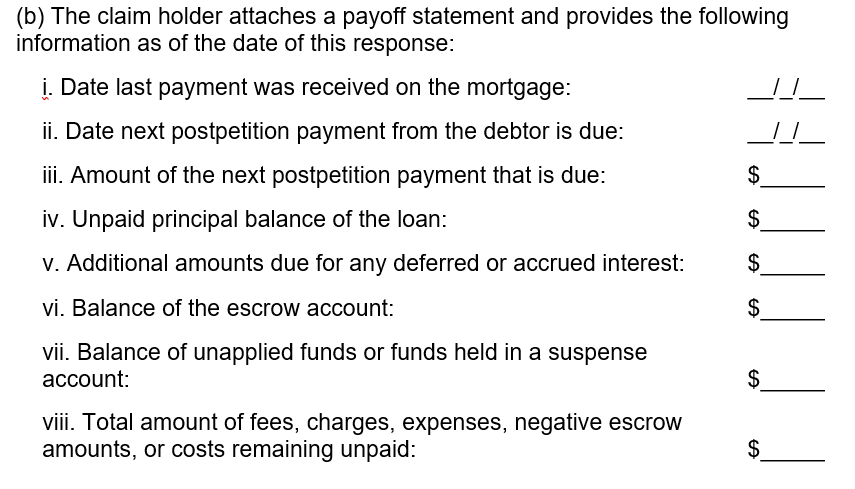
If you contend that all arrearages have not been paid, or that the debtor is not current in postpetition payments, or that fees, charges, expenses, escrow, and costs are due and owing, you must attach to the Response an itemized payment history showing the following amounts from the date of the bankruptcy filing through the date of the Response:
- All prepetition and postpetition payments received;
- The application of all payments received;
- All fees, costs, escrow, and expenses that you assert are recoverable against the debtor or the debtor’s principal residence; and
- All amounts you contend remain unpaid.
Creditors’ Attorneys: The large mortgage servicers and chapter 13 trustees have been preparing for these changes for the last year or two. It’s the local and regional banks and credit unions that may not be aware of their new obligations under Rule 3002.1 (or the sanctions for failure to respond). Creditors’ attorneys, make sure your clients are up to speed.
In future posts I’ll talk about two optional motions that debtors or the trustee can file at different stages of the case and the creditors’ need to respond (hint: creditors will include the same data points and printouts in every response they file). I’ll also talk about the expanded scope of Rule 3002.1 and the reasons the Rule was amended. In the meantime, you can view/download a chart summarizing the six new Official Forms here.